 TAROFLIP
5-Card Relationship Tarot Spread: A Deeper Look at Love
A three-card pull can describe your situation, but a relationship is two people’s stories plus the space between them — and that needs more room. The 5-card relationship tarot spread gives each side its own seat: <strong>1. You in this bond</strong> (your stance, needs, and patterns), <strong>2. Them in this bond</strong> (theirs — read with curiosity, not as a verdict on them), <strong>3. The shared ground</strong> (what connects you, the foundation), <strong>4. The friction</strong> (where you rub — the growth edge), and <strong>5. Where it leans</strong> (the direction of the bond: a tendency, never a promise). Position 4 is the whole point and the part most people flinch at. Friction in a spread is not a doom verdict; it is the specific place the relationship is asking you to grow. A Tower in position 4 does not mean the relationship is collapsing — it means something in the dynamic needs honest disruption. Read it as the agenda for the next real conversation, not as a reason to have it in a panic. Before you pull, phrase the question around the bond, not the person: “what do I need to see about this connection?” works better than “what are they thinking?” The spread can only show your side of the dance with honesty — but that is usually the side you needed to see. One last honesty rule: pull for yourself, not as a proxy for them. The spread reads the bond through your eyes because those are the only eyes you can change. If a position stings, stay with it a breath longer than comfortable — the sting is usually where the growth is.
Tarot works best here as structured reflection: three cards — where you stand, what crosses you, where things lean — read together around your exact question. Selene, TaroFlip's AI reader, writes every interpretation from your words, never from a script.
How to read the friction position without flinching
Read position 4 as a verb, not a noun: it describes something happening, not something wrong. Ask “what is this friction trying to teach us?” rather than “who is at fault?” Then check it against position 3, the shared ground — strong ground with hot friction means a bond worth working on; shaky ground with hot friction means the kindest question may be whether this connection still fits. If the friction keeps pointing at the same theme, a relationship crossroads reading can help you weigh stay-or-go honestly.
When to choose this spread over a three-card pull
Use the five-card layout when the question involves patterns rather than moments: the same fight on repeat, a situationship that will not define itself, a marriage in a rough season. For a quick temperature check — “how is today between us?” — the three-card spread is cleaner. The full position guide lives on the relationship spread page, and a free reading with your exact question takes about a minute.
What to ask before you pull
The spread answers the question you bring, so bring a good one. “What do I need to see about this connection?” works. “Is this relationship healthy?” works. “What are they hiding?” does not — the spread cannot surveil another person, and questions shaped like accusations produce readings shaped like anxiety. Pull once per question; pulling three times until the cards agree is just shopping for comfort. Give the spread a fair shot at honesty: if position 1 (you in this bond) describes someone you do not want to be, that is the reading working, not the reading failing. And pull when you can sit with the answer for twenty minutes, not five minutes before a difficult conversation — the spread is a mirror, not a weapon. Let it change how you show up first; the conversation changes after.
Cards often tied to this question


Questions, answered
Can tarot answer this question?
Tarot doesn't predict outcomes — it reflects the dynamics around your question so you can see your situation more clearly. Think of it as a mirror with symbols rather than a crystal ball.
How do I get a free reading for this?
Ask your question in your own words on TaroFlip's free reading page, draw three cards, and Selene writes an interpretation around your actual question. No account, no card, about a minute.
Which cards are associated with this kind of question?
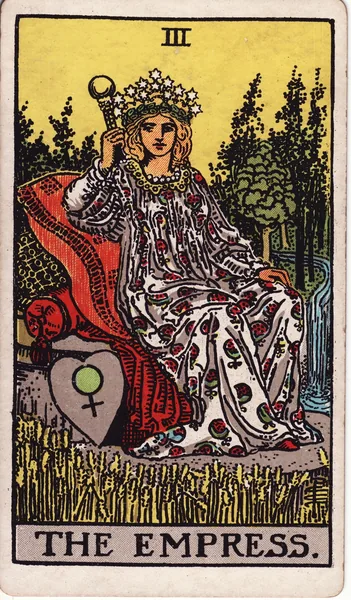
Readers often look to cards like The Empress, Knight of Cups, Six of Cups for love & relationships questions — each one highlighting a different facet of the situation.
Ask Selene yourself
Your question, three cards, and a full AI interpretation — free, no account, about a minute.