 TAROFLIP
Should I Give Up on My Crush? Free Tarot Guide
Should you give up on your crush? The honest version of this question is rarely about whether they like you back. It is about what this crush is costing you, and whether the thing you are waiting for is a change you have actually seen, or a version of the person you keep imagining. A tarot reading works best here when it separates three things people confuse: signs of real interest, signs of ordinary politeness, and signs that are really your own hope reflected back at you. Only the first group is evidence about them; the other two are evidence about you, and both deserve honesty. Below are the signals worth trusting, the stories to stop telling, a deadline you set before you ask again, the cards readers notice when letting go is on the table, and a three-card spread that asks about your next step instead of their next move.
Tarot works best here as structured reflection: three cards — where you stand, what crosses you, where things lean — read together around your exact question. Selene, TaroFlip's AI reader, writes every interpretation from your words, never from a script.
Three signals worth trusting, and three that are not
Trust behaviour that costs something and repeats across different settings. They remember what you said and bring it up later, unprompted. They make time when making time is inconvenient, not only when they are bored. They move the relationship forward in some small, concrete way: a second meeting planned, a question asked about your life, a boundary of yours respected without being reminded. Those are not guarantees, but they are observable, and observable beats interpretable every time. If you cannot list three such behaviours, you do not yet have evidence of interest. You have evidence of attention, which is a different thing.
Stop telling the stories that feel like evidence but are not. A fast reply is not interest; some people reply fast to everyone. A viewed story is not a message. A warm evening together is not a plan, especially if nothing follows it. And the strongest trap of all: the feeling itself. The intensity of a crush says a great deal about your inner life and almost nothing about the other person's intentions. Our page on is my crush interested in me sorts the same signs in detail, and it is worth reading before you decide that a feeling is a fact.
Set a deadline before you ask the cards again
A crush without a deadline is a room you move into. Give it an edge: four weeks, say, or one season, and write down what would have to be true by then for continuing to make sense. Not a feeling, but a behaviour: one real conversation, one meeting that actually happens, one step they take without being chased. If the date arrives and the test has not been met, that is not a failure of hope. It is the information the waiting was supposed to produce, and it is kinder than another season of re-reading the same messages.
The deadline also protects you from the most common way this question goes wrong: asking the cards again until they agree with you. One focused reading, one decision, one review date. If you reach the date and nothing has changed, the honest sentence is usually already written; the cards are just being asked to sign it. If you are still deciding whether to speak at all, our page on should I confess my feelings covers the telling itself, including the three checks before you say anything.
Cards readers notice when letting go is on the table
The Eight of Cups is the classic leaving card: a figure walking away from stacked cups toward higher ground. It does not mean the cups were worthless. It means they no longer fill the person who stacked them, and staying to guard them costs more than leaving. The Eight of Cups reversed tells the other half of the story: knowing it is time to go and staying anyway, usually out of fear of the empty space after. If that card keeps appearing, the block is rarely love. It is usually the fear of being alone with the decision.
The Six of Cups warns against the opposite error: reading every new interaction through nostalgia for a moment that may never have meant what you thought it meant. Upright it shows happy memories; the Six of Cups reversed shows the same pull turned sticky, living in a memory instead of learning from it. And the Two of Swords reversed marks the decision itself avoided: eyes covered, a choice deferred, peace kept by not choosing. Cards do not decide this for you. They show which part of the story you are avoiding, and in a giving-up question, the avoided part is usually the deadline.
A three-card spread for the decision
Try three positions, asked in this order: what am I actually holding on to, what is this crush costing me, and what is the smallest step I can take this week? The first position often surprises people, because what they are holding is rarely the person. It is the plan, the version of the future, the afternoons already spent imagining it. The second position names the cost in plain terms, which makes it harder to romanticise. The third position must be small enough to do this week: one boundary stated, one evening reclaimed for yourself, one honest conversation with a friend about what you actually want.
Do not fold a second question into this spread. Whether they like you is a different question, covered on our page about is my crush interested in me, and whether to tell them is covered on should I confess my feelings. If the answer to giving up turns out to be yes, the next question usually arrives on its own: should I move on is about the life after the crush, not about the crush itself. Ask one focused question in a three-card spread — "what would letting go look like, in practical terms?" — and notice which card you want to re-read until it gives you permission. The urge to be given permission is usually where the honest sentence lives.
Cards often tied to this question
Questions, answered
Can tarot answer this question?
Tarot doesn't predict outcomes — it reflects the dynamics around your question so you can see your situation more clearly. Think of it as a mirror with symbols rather than a crystal ball.
How do I get a free reading for this?
Ask your question in your own words on TaroFlip's free reading page, draw three cards, and Selene writes an interpretation around your actual question. No account, no card, about a minute.
Which cards are associated with this kind of question?
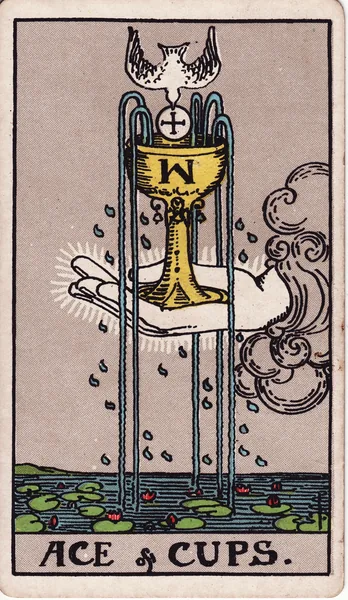
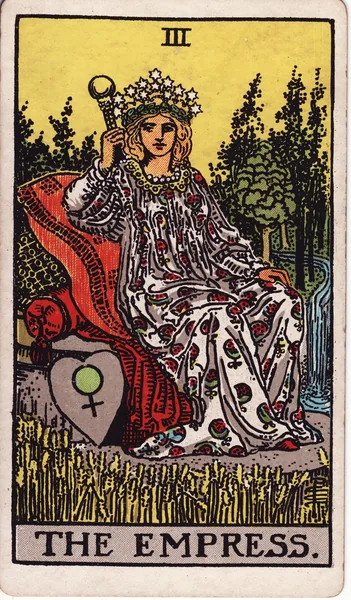
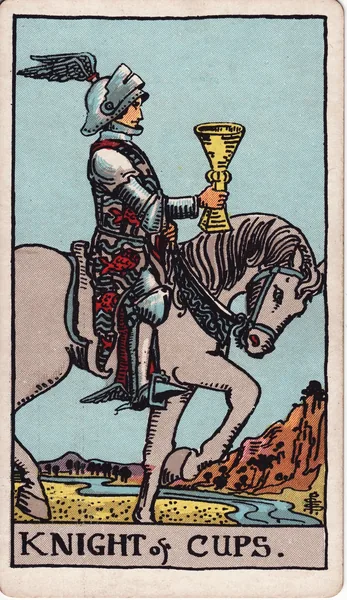
Readers often look to cards like Ace of Cups, The Empress, Knight of Cups for love & relationships questions — each one highlighting a different facet of the situation.
Ask Selene yourself
Your question, three cards, and a full AI interpretation — free, no account, about a minute.