 TAROFLIP
Should We Break Up Tarot Reading: Free Guide
Should we break up? The question usually arrives long before it is asked out loud. It sits behind the small arguments that never quite resolve, the evenings that feel more like roommates than partners, the version of the relationship you keep describing to friends in the past tense. A tarot reading cannot decide this for you, and any page that claims it can is selling certainty it does not have. What the cards can do is separate the three questions hiding inside the one you asked: is this a bad season or a finished story, what would staying actually require, and what would leaving actually cost? Below are the ways to tell a rough patch from a real ending, three checks before you decide anything, the cards readers notice when breaking up is on the table, and a three-card spread that asks about your next step instead of their next move.
Tarot works best here as structured reflection: three cards — where you stand, what crosses you, where things lean — read together around your exact question. Selene, TaroFlip's AI reader, writes every interpretation from your words, never from a script.
A rough patch or a real ending: how to tell
A rough patch has a shape you can name: a specific problem, a bad month, a habit that started after something changed. Both people can describe it the same way, and both are willing to work on the same thing. A real ending is harder to name because it is not one problem. It is a pattern: the same argument returning in different clothes, the same apology followed by the same week, the repair that gets promised and never quite starts. The test is not how bad the worst day was. It is whether the good days are getting further apart, and whether either of you still believes the next month will be different for a reason, not just a hope. Our page on should I stay or leave draws the same line from the decision side, for the moment before the question becomes urgent.
Watch what happens after a hard conversation, not during it. A rough patch usually gets lighter after something is said out loud: relief, a plan, even an awkward laugh. A finished story gets heavier, because the conversation only confirms what both people already suspected. If every honest talk ends in the same place — exhaustion, not clarity — the relationship may already have told you its answer, and the tarot reading is just the place where you finally hear it. If you are weighing the same question from the crossroads rather than the ending, our page on relationship crossroads covers the wider fork.
Three checks before you decide anything
First, name the pattern in one sentence, with dates. "We argue about money every month since March, and each time we agree to a budget and stop within a week." A pattern you can date is a pattern you can work on. A feeling you cannot date — "it just feels wrong lately" — may be real, but it is not yet a decision. Write the sentence down before you ask the cards, because a reading built on a dated pattern reflects your situation, and a reading built on a mood reflects only the mood.
Second, check the repair record, not the repair promises. Has anything actually changed since the problem was named? A changed pattern is observable: the conversation that used to end in a shutdown now ends in a repair, help offered without being asked, a plan with a date on it. A promised pattern is a sentence about the future, and sentences are cheap when someone is afraid of losing you. If the same repair has been promised three times and attempted zero, that is not a rough patch. That is the answer, arriving slowly.
Third, ask whether your life is still full size inside this relationship. If staying means pausing the move, the friendship, the work you care about, the evenings that belong to you, then staying is not loyalty to a person. It is a loan taken out against your own life, and loans come due whether or not the relationship survives. Either answer is respectable. What is not kind, to you, is another season spent in a waiting room with no appointment booked.
Cards readers notice when breaking up is on the table
The Eight of Cups is the classic leaving card: a figure walking away from stacked cups toward higher ground. It does not mean the cups were worthless. It means they no longer fill the person who stacked them, and staying to guard them costs more than leaving. The Eight of Cups is the card to watch when the question is not whether the relationship was good, but whether it is still alive.
The Three of Swords shows the pain that is already here, not the pain that might come. It is often misread as a prediction of heartbreak, but in a break-up question it usually describes the present: the hurt that staying is already causing, named out loud for the first time. The Three of Swords asks whether the pain of leaving is really worse than the pain of staying, or only more visible. Death appears here too, and it is widely misread. In this context it marks the end of a chapter, not a punishment and not a verdict on the people in it. The Death card is the card of a door closing so that a different one can open, and it is worth noticing when it shows up beside cards of relief rather than dread.
A three-card spread for the decision
Try three positions, asked in this order: what is actually ending, what is still alive, and what is the smallest honest step I can take this week? The first position names the part that is already over, even if nobody has said so. The second position is the one people skip, and it matters most: something may still be alive — kindness, respect, a shared history — and knowing what is alive keeps the decision from becoming a demolition. The third position must be small enough to do this week, and it has only three honest forms.
Stay with a repair plan: one concrete change, a date to review it, and a shared agreement about what happens if it does not hold. Have the conversation: a structured talk with a date on it, where both people say what they actually need instead of what they think the other wants to hear. Or leave with a plan: not a dramatic exit, but a practical sequence — what is said, what is sorted, what happens next week. If the answer turns out to be leaving, our page on should I move on covers the life after the decision, and getting over a breakup covers the grieving part. Ask one focused question in a three-card spread and notice which step you are avoiding. The avoided step is usually where the honest sentence lives.
Cards often tied to this question
Questions, answered
Can tarot answer this question?
Tarot doesn't predict outcomes — it reflects the dynamics around your question so you can see your situation more clearly. Think of it as a mirror with symbols rather than a crystal ball.
How do I get a free reading for this?
Ask your question in your own words on TaroFlip's free reading page, draw three cards, and Selene writes an interpretation around your actual question. No account, no card, about a minute.
Which cards are associated with this kind of question?
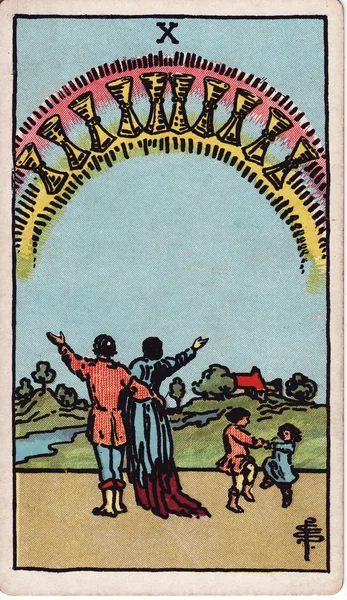
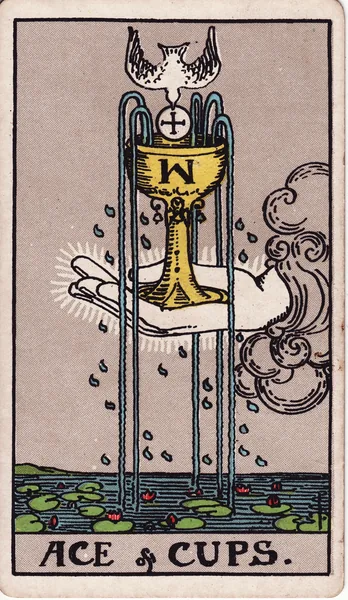
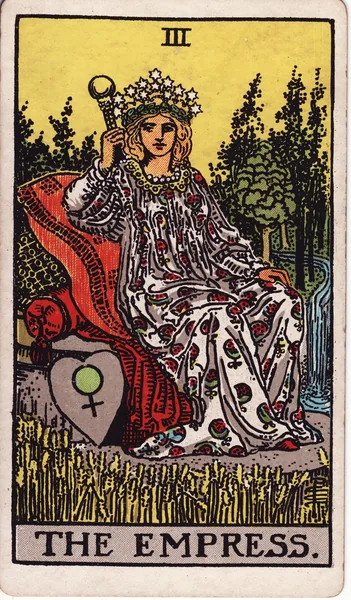
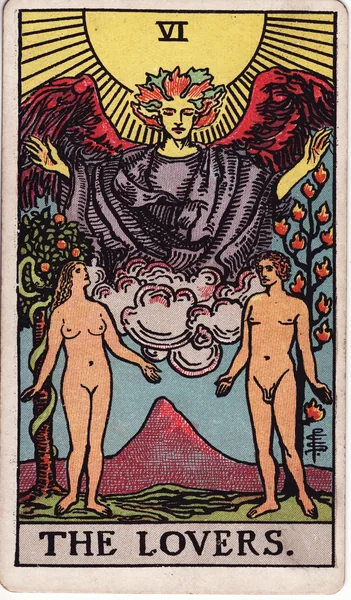
Readers often look to cards like Ten of Cups, Ace of Cups, The Empress, and The Lovers (reversed) for love & relationships questions — each one highlighting a different facet of the situation.
Ask Selene yourself
Your question, three cards, and a full AI interpretation — free, no account, about a minute.