 TAROFLIP
How to Ask Tarot Questions (So You Get a Useful Answer)
The cards do not answer the question you type — they answer the question underneath it. That is why two people can pull identical cards and get completely different readings: one asked “what is the real cost of staying in this job?” and the other asked “should I quit?” The first gets a mirror; the second gets a coin flip dressed up as wisdom. The difference between a useful reading and a confusing one is almost always the question, not the cards. Three rules cover most of it. First, ask about your part, not someone else’s mind. “What are they thinking?” turns the reading into surveillance and the cards into gossip; “what do I need to see about this connection?” turns the same three cards into a mirror you can actually use. Second, one question per reading. Stacking three worries into one pull gives you a soup the cards cannot season — pull separately, in the order that scares you most. Third, give it a timeframe and a shape: “this month” beats “ever,” and “what is this costing me?” beats “should I?” If your question starts with “should I,” split it before you pull. Ask “what does staying cost me?” and “what does leaving cost me?” as two readings, then compare — you will learn more from the contrast than from any single verdict. Tarot reflects dynamics, not destiny; the best questions invite reflection, not permission. Write the question down before you shuffle. Vague in, vague out — that is not the deck failing, that is physics.
Tarot works best here as structured reflection: three cards — where you stand, what crosses you, where things lean — read together around your exact question. Selene, TaroFlip's AI reader, writes every interpretation from your words, never from a script.
The 3 question shapes that work every time
1. “What do I need to see about X?” — the all-purpose lens. Works for relationships, jobs, moods, crossroads. It assumes something is worth seeing, which keeps you curious instead of anxious. 2. “What is the real cost of Y?” — for decisions you keep circling. Cost includes time, energy, and the person you become, not just money. 3. “What am I not seeing about Z?” — the blind-spot question, and the bravest one. Expect the answer to sting a little; that is how you know it landed.
Questions that waste a reading
Surveillance questions (“what is he hiding?”) produce readings shaped like anxiety, because the spread can only show your side of the dance. Deadline demands (“exactly when will I get promoted?”) mistake reflection for scheduling. And re-asking the same question until the cards “agree” is just shopping for comfort — the first honest pull is the reading; the fourth is a negotiation. If you are stuck between options, our guide to hard decisions helps you split the question properly before you pull.
A worked example: fixing a bad question
Bad: “Will I find love?” — unanswerable, passive, and it puts your life on hold while the cards deliberate. Fixed: “What am I doing that keeps love at arm’s length?” — specific, about your part, and it gives the cards something to actually reflect. Try the fixed version as a three-card pull and watch how much more the reading has to say.
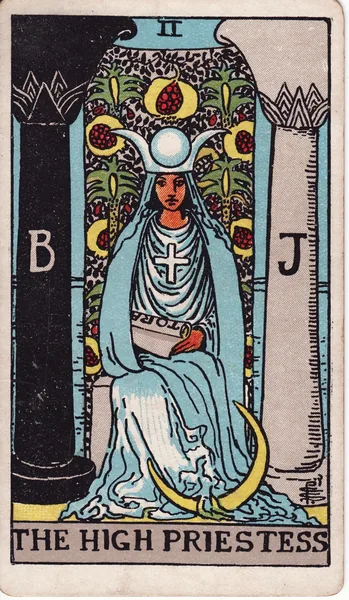
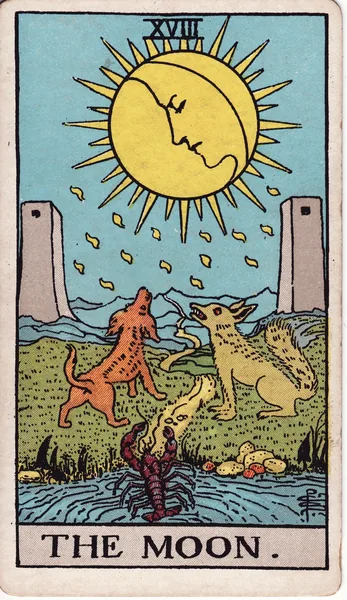
Cards often tied to this question

Turn a yes-or-no question into a three-card question
A yes-or-no question is the most common question people bring to tarot, and also the one a three-card spread handles worst when asked as written. “Will I get the job?” asks the cards to decide your future for you, and the answer you get will be as narrow as the question. Try the same worry in three parts instead: what is working in my favour, what is standing in the way, and what is the one thing I can do this week? Those are the three positions of a three-card spread, and they turn a verdict into a plan.
That shift is also why a tarot reading is not a coin toss. A coin answers yes or no and leaves you exactly where you were. A three-card answer names the thing you can act on, which is the part of the question that was yours all along. If your question is strictly yes or no — a decision with a deadline, two real options — our yes-or-no tarot reading explains how to frame it so the cards answer the choice, not the outcome. Ask the question the way you would ask a trusted friend, and notice which version of the question you keep avoiding. That is usually the real one.
Questions, answered
Can tarot answer this question?
Tarot doesn't predict outcomes — it reflects the dynamics around your question so you can see your situation more clearly. Think of it as a mirror with symbols rather than a crystal ball.
How do I get a free reading for this?
Ask your question in your own words on TaroFlip's free reading page, draw three cards, and Selene writes an interpretation around your actual question. No account, no card, about a minute.
Which cards are associated with this kind of question?
Readers often look to cards like The High Priestess, The Star, The Moon for spirituality & growth questions — each one highlighting a different facet of the situation.
What is the best way to phrase a yes-or-no tarot question?
Turn it into three smaller questions: what is working in my favour, what is standing in the way, and what is the one thing I can do this week. A three-card spread answers those directly, and the answer you get is a plan rather than a verdict. If the decision has a deadline and two real options, a yes-or-no tarot reading can still help — frame it around the choice, not the outcome.
Ask Selene yourself
Your question, three cards, and a full AI interpretation — free, no account, about a minute.