 TAROFLIP
What It Means When Tarot Cards Fall Out While Shuffling
Cards fall out of the deck while shuffling for the same reason socks escape the dryer: physics, mostly. A card with a bent corner, a fast shuffle, a deck that is slightly too big for your hands \u2014 all of these produce jumpers. That does not make the moment meaningless. Meaning in tarot has never lived in the mechanism; it lives in what you notice. A card landing face-up on the floor has your attention in a way a card dealt in order does not, and attention is the whole instrument.\n\nSo treat a jumper as a card that asked to be read, not as a command. Pick it up, note it, and ask one question: does this card connect to the question I was about to ask? If it does \u2014 if you were shuffling on a relationship question and the Two of Cups just slid out \u2014 read it as a first line of the reading, a card that refused to wait its turn. If it does not connect, set it aside and shuffle again; not every accident is a message, and forcing a connection onto a random card is how readings turn into horoscopes.\n\nIf the same card keeps falling out across days, that is a different pattern worth noting \u2014 not because the deck is haunted, but because your attention keeps snagging on the same theme. Read our guide on <a href="/questions/spirituality/same-tarot-card-keeps-appearing-meaning.html">why the same card keeps appearing</a> for that case. And if jumpers happen constantly, check the practical side first: a deck with warped or oversized cards will jump no matter what you believe.
Tarot works best here as structured reflection: three cards — where you stand, what crosses you, where things lean — read together around your exact question. Selene, TaroFlip's AI reader, writes every interpretation from your words, never from a script.
One jumper vs many jumpers
One card out is a nudge. Three or more cards out at once is a mess, not a message \u2014 gather them, shuffle again, and pull properly. Readers who treat every spill as a five-card reading end up reading chaos, and chaos flatters every interpretation because it contains all of them.
Face-up or face-down: does it matter?
Tradition says a face-up jumper is louder, a face-down one quieter. Practically, the difference is whether you saw the card before choosing to read it \u2014 and seeing it first is fine, as long as you are honest with yourself that you saw it. The reading works on your reflection either way; it does not work on pretending you did not peek.
A small practice for jumpers
Keep a note of jumpers for a month \u2014 card, date, and the question you were holding. At month\u2019s end, look at the list instead of any single incident. Patterns across a month tell you more than any one dramatic drop, and they also tell you whether your shuffling technique needs work \u2014 see our shuffling guide if the deck keeps escaping.
Cards often tied to this question
Questions, answered
Can tarot answer this question?
Tarot doesn't predict outcomes — it reflects the dynamics around your question so you can see your situation more clearly. Think of it as a mirror with symbols rather than a crystal ball.
How do I get a free reading for this?
Ask your question in your own words on TaroFlip's free reading page, draw three cards, and Selene writes an interpretation around your actual question. No account, no card, about a minute.
Which cards are associated with this kind of question?
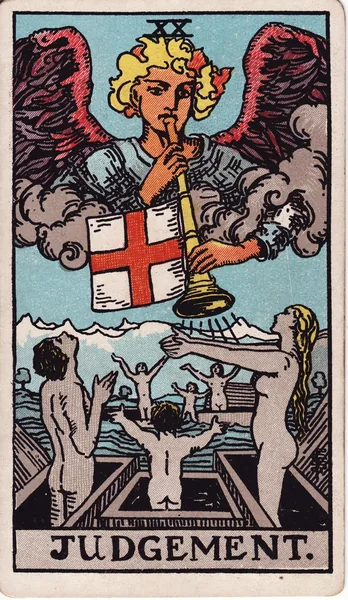
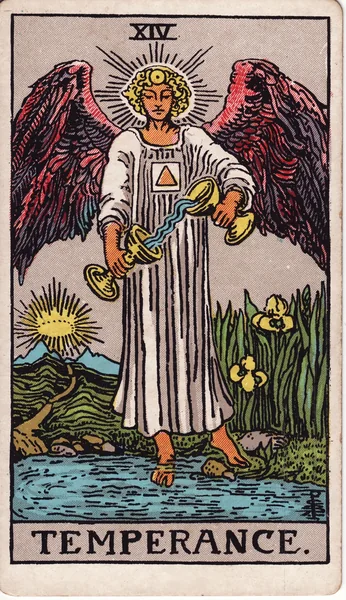
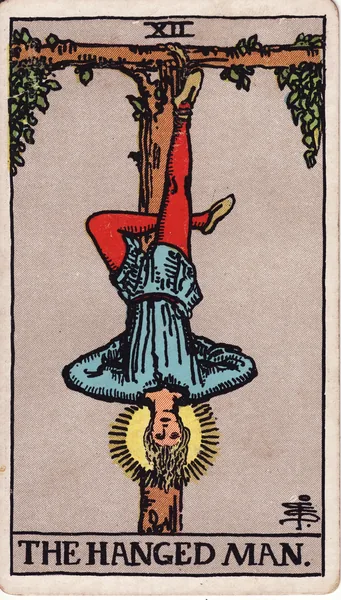
Readers often look to cards like Judgement, Temperance, The Hanged Man for spirituality & growth questions — each one highlighting a different facet of the situation.
Ask Selene yourself
Your question, three cards, and a full AI interpretation — free, no account, about a minute.