 TAROFLIP
New Moon Tarot Spread: Setting Intentions With the Moon
Every lunar cycle has exactly one blank page: the new moon, when the sky goes dark and nothing is illuminated yet. That is why the new moon tarot spread is built for intention-setting rather than prediction. You are not asking the cards what will happen; you are using them to decide what you want to grow while the light is still coming back. Readers who work with the moon treat the new moon as the planting and the full moon as the harvest — two halves of one practice. The simplest new moon layout is three cards: <strong>1. What to plant</strong> (the intention or seed worth your energy this cycle), <strong>2. What to tend</strong> (the habit, relationship, or project that needs steady attention), and <strong>3. What to release</strong> (the old pattern taking up the soil). Read them as one sentence about the coming month, not three separate fortunes. A practical rhythm: pull at the new moon, then revisit the same three positions at the full moon and ask what changed — the comparison is where the insight lives. For the other half of the practice, see how the two phases differ in our new moon vs full moon guide — and if you want dates, the lunar events worth timing readings around are tracked on the cosmic calendar. You do not need any special deck or ritual objects — the spread works with whatever cards you have, because the moon phase itself is the ritual.
Tarot works best here as structured reflection: three cards — where you stand, what crosses you, where things lean — read together around your exact question. Selene, TaroFlip's AI reader, writes every interpretation from your words, never from a script.
The 3-card new moon layout, position by position
Position 1 — What to plant. This is the desire underneath the desire: not “a promotion” but “work that uses my actual strengths.” Court cards here often point at a quality to cultivate; Major Arcana point at a life theme asking for attention. Position 2 — What to tend. The unglamorous middle: the weekly habit, the standing conversation, the draft you keep avoiding. Pentacles here are almost literal — tend the practical thing. Position 3 — What to release. Read this one kindly; release positions describe patterns that once protected you and now cost too much.
Making it a monthly practice
One new moon pull a month beats ten anxious pulls a week — rhythm turns tarot from a slot machine into a journal. Mark the new moon dates on the cosmic calendar, pull your three cards on the night, and write one sentence per position in a notes app. At the full moon, re-read those sentences before your daily card. The differences between intention and outcome, month after month, teach you more about your own patterns than any single dramatic reading. For the release-side of the cycle, our new moon vs full moon guide covers what the full moon phase is for.
New moon or full moon: which night for which spread
Use the new moon spread for beginnings: intentions, seeds, directions. Use the full moon for endings and clarity: what is illuminated, what is ready to release, what the month actually taught you. Pulling an intention spread at the full moon is like planting at harvest — the energy is wrong for the question. If you only do one lunar reading a month, alternate: intentions at the new moon, then a three-card review at the full moon (“what grew / what surprised me / what I release”). The moon does not care whether you believe in it; the practice works because monthly rhythm beats sporadic intensity. Twelve intentional pulls a year will show you your own patterns more honestly than any single dramatic reading.
Cards often tied to this question
Questions, answered
Can tarot answer this question?
Tarot doesn't predict outcomes — it reflects the dynamics around your question so you can see your situation more clearly. Think of it as a mirror with symbols rather than a crystal ball.
How do I get a free reading for this?
Ask your question in your own words on TaroFlip's free reading page, draw three cards, and Selene writes an interpretation around your actual question. No account, no card, about a minute.
Which cards are associated with this kind of question?
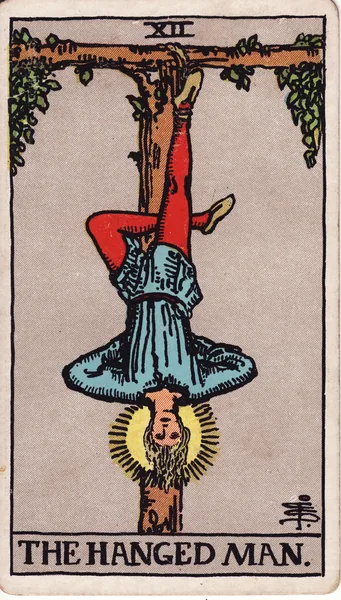
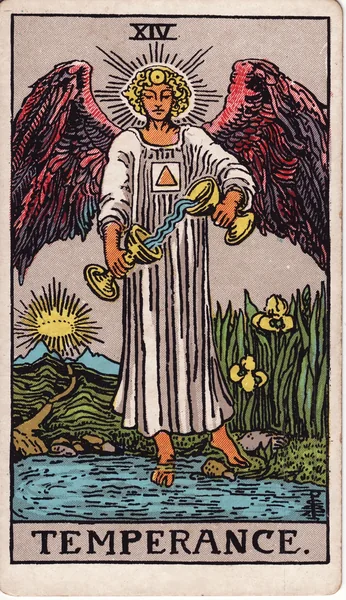
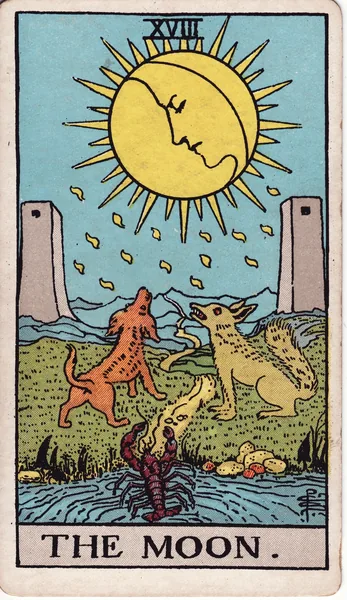
Readers often look to cards like The Hanged Man, Temperance, The Moon for timing & when questions questions — each one highlighting a different facet of the situation.
Ask Selene yourself
Your question, three cards, and a full AI interpretation — free, no account, about a minute.