 TAROFLIP
Your First Love Tarot Reading: Free Guide
First love is the question people ask when a specific person from the past still shapes how they love now. It might be the person you never quite got over, the one who got away before anything properly began, or the memory you keep measuring everyone else against. A tarot reading cannot tell you whether your first love will come back, or whether they still think of you. It cannot confirm a feeling that belongs to someone else. What the cards can do is show you what that first love left behind: the standard it set, the wound it left, the pattern it started, and whether you are looking for the person or for the feeling of being young and chosen again. Below are the three ways first love shows up in a reading, what tarot can and cannot say about one, the cards readers watch, and a three-card spread for reading your own first love clearly.
Tarot works best here as structured reflection: three cards — where you stand, what crosses you, where things lean — read together around your exact question. Selene, TaroFlip's AI reader, writes every interpretation from your words, never from a script.
Three ways first love shows up in a reading
The first is the one that ended cleanly and still glows. It is a finished story you visit, not a room you live in. You think of them on birthdays and anniversaries of nothing in particular, the way you think of a town you once lived in. The feeling is warm, and it does not ask anything of you. In a reading, this kind of first love usually appears as a measure: the standard of honesty, or intensity, or attention that later loves are quietly held against. The question is not whether they were better. It is whether the standard they set is one you still want to live by, or one that has become a filter nothing new can pass.
The second is the unfinished one. No proper ending, no conversation that closed the door, a question that was never answered and still hums underneath everything after it. This is the first love that keeps people asking the cards the same question for years, because the question was never really about the future. It was about the past, asking for a verdict the past never gave. If this is yours, the reading is not about whether they will come back. It is about whether you still need an ending, and what an ending you give yourself would look like. Our page on will I find love again takes up the next question — readiness — once the unfinished business has a shape.
The third is the pattern. Every new person gets measured against the first, usually without you noticing: the laugh compared, the attention compared, the feeling compared. Nobody new ever quite passes, because the comparison is rigged — a memory, polished by time, against a real person with ordinary flaws. If every new connection feels like a weaker copy, the first love has stopped being a memory and become a gate. Our page on will I meet someone soon looks at the timing question honestly, including the part timing cannot answer when a pattern is doing the blocking.
What tarot can and cannot say about a first love
Tarot cannot tell you whether your first love still thinks of you. It cannot confirm a feeling that belongs to someone else, cannot promise a reunion, and cannot tell you whether to reach out. Any page that offers those certainties is selling something the cards do not have. A reunion is a decision two people make, and one person’s cards cannot make it for the other.
What tarot can show is what the memory is doing to your present choices: whether nostalgia is guiding you toward what you value or blocking you from noticing what is actually in front of you; what you actually miss, which is often not the person so much as the feeling of being young and chosen, or the version of yourself that existed then; and the pattern — whether you keep choosing people who resemble the first love, and what that choice is protecting you from. If the first love involved someone who hurt you, this reading is about your clarity, not about whether they have changed. The cards are a mirror for your own situation, not a message from someone else’s life.
Cards readers watch when the question is a first love
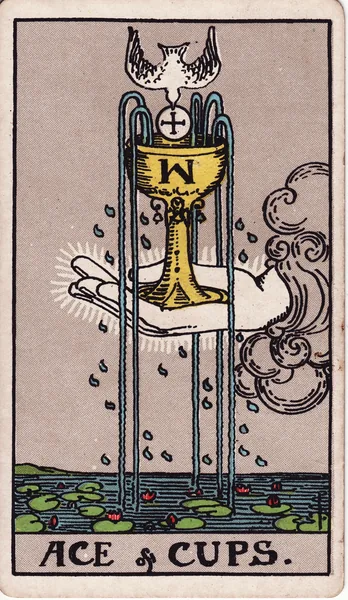
The Six of Cups is the card of the past returning: nostalgia, old sweetness, the childhood street revisited. Upright it shows happy memories and a pull toward what was. It is the card to watch when the question is really about whether the past was as good as you remember, and whether remembering it is helping you or keeping you still. The Lovers is the card of choice, not of destiny — it appears when the question is really "which way do I choose?" rather than "what will happen to me?" The Star is the card of hope after the ending: the wish itself, and the honest question of whether the wish still serves you or has become a place to hide. The Ace of Cups is the newest feeling in the spread — a beginning so early it has no name yet, which is exactly why it is easy to miss while looking backward.
If you want to know the cards themselves, start with the Six of Cups card page, the Lovers card page, the Star card page, and the Ace of Cups card page — then bring what you learn back to your own question, not the other way around.
A three-card spread for a first love
Try three positions, asked in this order: what did this love teach me; what am I still carrying; and what is the smallest honest step I can take this week? The first position names the real lesson, not the flattering one — the standard it set, the wound it left, the thing it showed you about what you need. The second position is the carrying: the comparison, the unfinished sentence, the hope kept on a shelf. The third position must be small enough to do this week, and it has only three honest forms.
Write the unsent letter and read it back to yourself, so you can hear what you are actually asking for — the person, or the feeling, or an ending. Tell one trusted friend the true version, so the story stops being a room with only you in it. Or ask one direct question of the present instead of the past — not "will they come back" but "what do I want now, with the person I am today?" Ask one focused question in a three-card spread and notice which step you keep skipping. The step you keep skipping is usually the one the reading is actually about.
Cards often tied to this question
Questions, answered
Can tarot answer this question?
Tarot doesn't predict outcomes — it reflects the dynamics around your question so you can see your situation more clearly. Think of it as a mirror with symbols rather than a crystal ball.
How do I get a free reading for this?
Ask your question in your own words on TaroFlip's free reading page, draw three cards, and Selene writes an interpretation around your actual question. No account, no card, about a minute.
Which cards are associated with this kind of question?
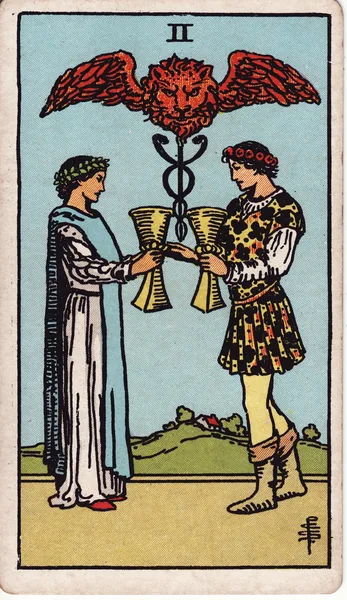
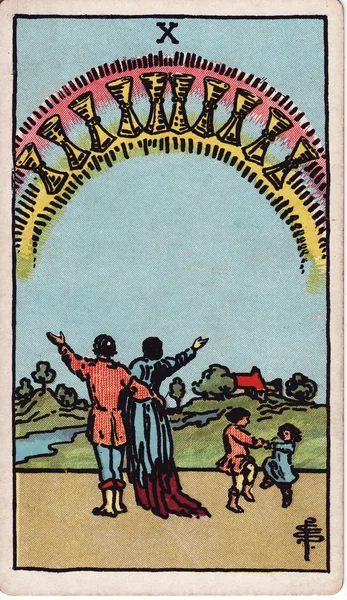
Readers often look to cards like Two of Cups, Ten of Cups, Ace of Cups for love & relationships questions — each one highlighting a different facet of the situation.
Ask Selene yourself
Your question, three cards, and a full AI interpretation — free, no account, about a minute.