 TAROFLIP
Ghosting Tarot Reading: Free Guide
Someone who texted every day has gone quiet, and the quiet has lasted long enough that checking your phone has become a habit of its own. The question that follows is rarely just will they come back. Underneath it sit three harder questions: what does this silence actually mean, what is waiting doing to your week, and what will you do if nothing changes? A ghosting tarot reading works best when it keeps those three apart. Silence is not one thing, and treating every silence as rejection leads to the same two mistakes: chasing someone who has already left, or waiting for someone who is simply overwhelmed. Below are the ways silence differs from distance, three checks to make before you decide anything, the cards readers notice when silence is the question, and a three-card spread that asks about your next step instead of their next message.
Tarot works best here as structured reflection: three cards — where you stand, what crosses you, where things lean — read together around your exact question. Selene, TaroFlip's AI reader, writes every interpretation from your words, never from a script.
Ghosting is not the same as being distant
Distance still has contact in it. Replies get slower and shorter, plans get vaguer, but messages keep arriving, and the relationship is still recognisably alive. Ghosting is different: contact stops entirely, without explanation, after a period when it was regular. The advice differs because the situation differs, and our page on why is he distant covers the slow-fade version of this problem. If replies have stopped completely, you are in the territory of this page.
Even within ghosting, the silence takes more than one shape. An overwhelmed pause is someone whose life has crowded out replying, and who may return when the pressure lifts. A slow fade is replies thinning over weeks until they stop, which usually means interest was already leaving before the silence began. A decided exit is someone who chose to leave without saying so, and who is unlikely to reopen the conversation. Tarot cannot verify which shape yours is. What it can do is show which shape your evidence fits, so you stop treating all three as the same rejection.
Three checks before you decide anything
First, check the pattern. Was contact daily and then zero overnight, or had it already been thinning for weeks? A sudden stop after steady contact points to something changing on their side; a long thinning points to a decision already half made. Second, check the length. A few days of silence is often busyness, illness, or a phone lost to a busy week. Two weeks and more is a different category, and pretending otherwise only extends the waiting. Third, check the last exchange. Was there a closing message, a row, or nothing at all? Nothing at all is not a verdict. It is an absence of data, and absence deserves a deadline, not an interpretation.
Write the observable facts down before you ask the cards: the last date you heard from them, how often you heard from them before that, and what the last message actually said. A reading built on facts reflects your situation. A reading built on the worst hour of checking your phone reflects only the checking. If the facts are thin, say so in the question itself, and let the cards answer the thinner, honest question.
Cards readers notice when silence is the question
The Hermit is the classic withdrawal card: a figure turning inward with a lamp, not to punish anyone but to think. When it appears in a silence question, it often points to someone who has retreated to sort out their own mind, and the honest response is to give that retreat a bounded time rather than interrupting it daily. Read more on our Hermit card page.
The Eight of Cups shows the other side of silence: a figure walking away from stacked cups toward higher ground. It does not mean the cups were worthless. It means they no longer fill the person who stacked them, and staying to guard them costs more than leaving. The Eight of Cups is the card to watch when the silence feels like an exit rather than a pause. The Four of Swords sits between the two: a deliberate rest, a pause that may be repair or may be the quiet before an exit. The Four of Swords asks you to treat rest as a state with an end date, not as an indefinite waiting room.
A three-card spread for sudden silence
Try three positions, asked in this order: what is this silence showing me, what is waiting costing me, and what is the smallest step I can take this week? The first position often surprises people, because the silence is rarely only about the other person. It shows what you were relying on their replies to prove. The second position names the cost in plain terms: sleep, concentration, the evenings spent re-reading old messages. Naming the cost makes it harder to romanticise the wait.
The third position must be small enough to do this week, and it has only three honest forms. Wait with a date: pick a review day, and if nothing has changed by then, the waiting ends by your decision, not by their reply, as our page on should I wait for my ex frames it. Send one light message: a single, low-pressure note with no demand attached, covered on our page about should I text my ex. Or close the door: stop checking, remove the prompt, and let the silence be the answer, which our page on should I move on takes up next. Ask one focused question in a three-card spread and notice which step you are avoiding. The avoided step is usually where the honest sentence lives.
Cards often tied to this question

Questions, answered
Can tarot answer this question?
Tarot doesn't predict outcomes — it reflects the dynamics around your question so you can see your situation more clearly. Think of it as a mirror with symbols rather than a crystal ball.
How do I get a free reading for this?
Ask your question in your own words on TaroFlip's free reading page, draw three cards, and Selene writes an interpretation around your actual question. No account, no card, about a minute.
Which cards are associated with this kind of question?
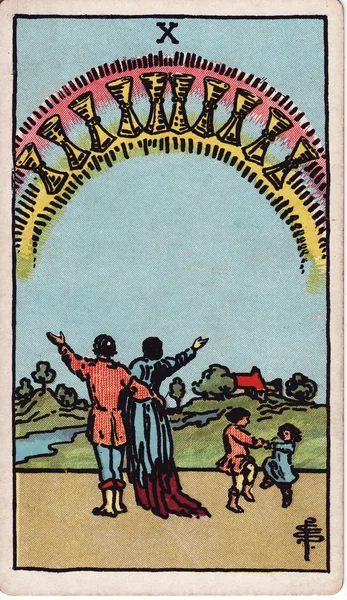
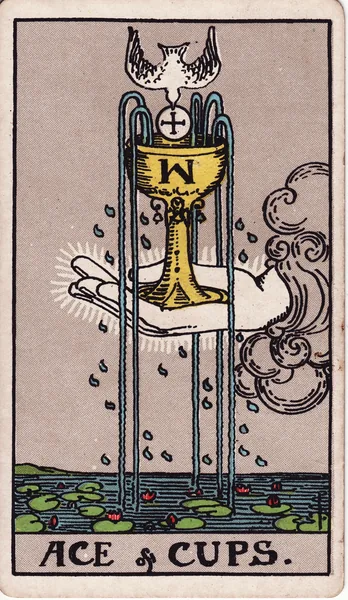
Readers often look to cards like Two of Cups, Ten of Cups, Ace of Cups for love & relationships questions — each one highlighting a different facet of the situation.
Ask Selene yourself
Your question, three cards, and a full AI interpretation — free, no account, about a minute.