 TAROFLIP
Should I Wait for My Ex? Free Tarot Guide
Should you wait for your ex? Waiting feels like loyalty, but loyalty without a deadline is just a pause that nobody agreed to end. A tarot reading works best here when it separates three postures people confuse: waiting for a change that is already visible, hoping for a change that has only been promised, and deciding to keep your own life open while you see what happens. Only the first is really waiting. The second is hoping with a calendar attached to nothing, and the third is a decision you can actually live with. Below are the three postures, three checks before you give waiting another month, the cards readers notice when waiting is the question, and a spread that puts a boundary around the wait instead of letting it run open-ended.
Tarot works best here as structured reflection: three cards — where you stand, what crosses you, where things lean — read together around your exact question. Selene, TaroFlip's AI reader, writes every interpretation from your words, never from a script.
Waiting, hoping, and deciding are three different postures
Waiting has an object: a change you can point to. The conversation that used to end in silence now ends in an apology. The plan that stayed a plan for a year now has a date on it. If you can name the change and you can see it already happening in small ways, waiting is a real posture, and it deserves a fair hearing. Hoping is different. Hoping has a feeling, not an object. It runs on the memory of how good things were, on a song, on a date on the calendar, and it asks for nothing verifiable in return. Hoping is not a flaw. It is simply not a plan, and treating it as one is how months disappear without a single decision being made.
Deciding is the third posture, and it is the one most people skip. Deciding sounds like this: I will keep my life open for three months, I will not put the move, the trip, or the new beginning on hold, and at the end of that time I will look at what actually happened, not at what I wished had happened. A decision like that does not force you to move on today. It gives waiting an edge, which is the kindest thing you can do for yourself, because an edge turns waiting from a room you live in into a season you pass through. Our page on should I move on looks at the same fork from the leaving side, and it is worth reading beside this one rather than instead of it.
Three checks before you give waiting another month
First, set a date and a test. Waiting without a date is not patience, it is drift. Pick a concrete review point — four weeks, eight weeks, a season — and write down what would have to be true by then for waiting to still make sense: not a feeling, but a behaviour. A message that starts a real conversation. A changed approach to the problem that ended things, not a changed description of it. A plan that includes your needs instead of only theirs. If the date arrives and the test has not been met, the answer is not a failure of hope. It is information, and it is the information waiting was supposed to produce.
Second, count the cost in ordinary life, not in dramatic terms. What is waiting postponing? The apartment you have not looked at, the friendship you have narrowed to one topic, the evenings spent re-reading old messages instead of living the current week. A cost you can name is a cost you can weigh. A cost you only feel tends to grow in the dark, and it is the quietest reason people stay in waiting rooms long after the appointment has passed. Third, ask whether your life is still full size while you wait. If waiting means pausing everything else, it is not loyalty to a person. It is a loan taken out against your own life, and loans come due whether or not the person returns.
Cards readers notice when waiting is the question
The Hanged Man is the waiting card, and it is widely misread as a card of doing nothing. In this context it marks a pause with a purpose: a suspension chosen deliberately, for a defined time, in order to see something clearly. The Hanged Man reversed tells the other half of the story: a pause that has stopped serving any purpose and become a habit, the waiting that continues because deciding feels harder than drifting. If that card keeps appearing, the question is rarely whether they will come back. It is whether you have confused patience with avoidance.
The Four of Swords appears here as rest, not retreat: a period of recovery after the ending, during which no decision is required and none should be forced. The Eight of Cups, upright, is the card of walking away from something that no longer fills you, and it is worth noticing when it shows up beside the Hanged Man: the two together often describe a person who already knows the answer and is asking the cards for permission to act on it. Cards do not decide this for you. They show which part of the story you are avoiding, and in a waiting question, the avoided part is usually the deadline.
A three-card spread for waiting with intention
Try three positions, asked in this order: what am I actually waiting for, what is waiting costing me, and what boundary do I keep whatever the answer? The first position must be answered in concrete terms. If you cannot name the change you are waiting for, you are not waiting. You are hoping, and hoping deserves honesty, not another month. The second position names the cost in plain terms, which makes it harder to romanticise. The third position is the one most readings skip, and it is the most important: a boundary decided before the answer protects you from every answer, including the yes you want. What you will not accept again, what you need to see before any conversation, how long you will wait for action rather than words.
Two boundaries deserve stating plainly. First, if your ex has asked for no contact, a reading does not override that. No card gives permission to cross a boundary someone set. If contact is open and you are deciding whether to reach out, our page on should I text my ex covers the message itself. Second, do not fold a second question into this spread. Whether he wants you back is a different question, covered on our page about does he want me back, and whether he is likely to return at all is covered on is my ex coming back. Ask one focused question in a three-card spread — "what would make this wait worth another month?" — and notice which card you want to re-read until it promises something. The urge for a promise is usually where the honest sentence lives. And if the honest sentence turns out to be that the wait is over, our page on getting over a breakup covers the grieving part of what comes next.
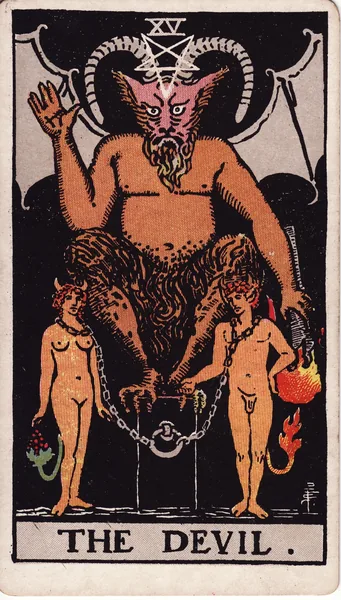
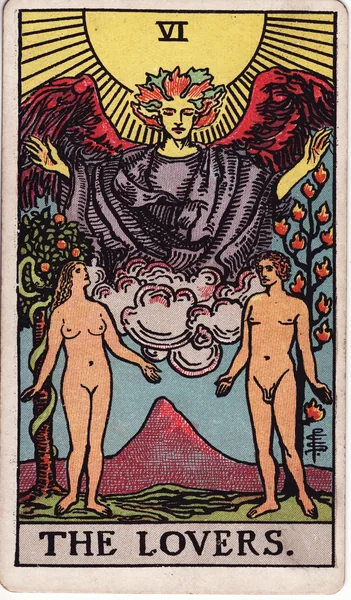
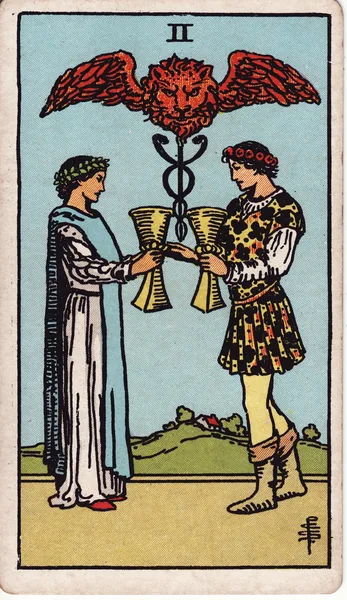
Cards often tied to this question
Questions, answered
Can tarot answer this question?
Tarot doesn't predict outcomes — it reflects the dynamics around your question so you can see your situation more clearly. Think of it as a mirror with symbols rather than a crystal ball.
How do I get a free reading for this?
Ask your question in your own words on TaroFlip's free reading page, draw three cards, and Selene writes an interpretation around your actual question. No account, no card, about a minute.
Which cards are associated with this kind of question?
Readers often look to cards like The Devil, The Lovers, Two of Cups for love & relationships questions — each one highlighting a different facet of the situation.
Ask Selene yourself
Your question, three cards, and a full AI interpretation — free, no account, about a minute.