 TAROFLIP
Is He Cheating Tarot: A Free Honest Guide
Is he cheating? It is the question people bring to tarot when they are already losing sleep — and it is the question tarot is worst at answering directly. No card can prove or disprove what another person has done. A reading cannot open your partner's phone, read their mind, or turn a suspicion into a fact. What the cards can do is narrower and more useful: they can separate the anxiety you are carrying from the observations you have actually made, name what the doubt is doing to your choices, and give you one concrete next step — usually a conversation, not another draw. Below are what tarot can and cannot say about cheating, how to tell anxiety from a real signal, the cards readers watch and what they actually mean, and a three-card spread for a doubt you can act on.
Tarot works best here as structured reflection: three cards — where you stand, what crosses you, where things lean — read together around your exact question. Selene, TaroFlip's AI reader, writes every interpretation from your words, never from a script.
What tarot can — and cannot — say about cheating
Start with the honest part, because it is the part that matters most: no tarot card can prove that your partner is cheating, and no spread can rule it out either. The Seven of Swords is the card people reach for first, and it does show secrecy — a figure slipping away with swords, looking back over a shoulder. But secrecy is a shape, not a fact. It can mean a partner hiding something, or it can mean a partner who has gone quiet because they are stressed, ashamed, or unsure how to say something hard. The Moon works the same way: it marks uncertainty, the part of the picture you cannot see clearly, and it appears just as often when the fear is doing the distorting as when something real is hidden. A card can name the atmosphere of a relationship. It cannot deliver a verdict on a person.
That limit is not a flaw in the cards. It is the boundary that keeps a reading honest. A reader who tells you a card proves infidelity is selling certainty the deck does not have — and the cost of that certainty lands on a real relationship. If you read Japanese or Korean, our 浮気タロット and 바람 의심 타로 guides cover the same ground in those languages: how to separate anxiety from signals, and how to have the conversation that actually answers the question.
Anxiety vs. signals: how to tell them apart
Anxiety and a real signal feel identical from the inside, which is why the distinction has to be made on paper, not in your head. Anxiety takes one event and connects it to everything: a late reply becomes proof of a pattern, a changed password becomes proof of a secret life. A signal is narrower and more boring. It repeats across different settings, over days or weeks: the phone face-down every evening, not once; the stories that stop adding up, not one story you misheard. The test is simple. For one week, write down only what you actually observed — the time, the change, the words used — without adding what you think it means. At the end of the week, read the list back. If the list is mostly one event retold five ways, the anxiety is doing the work. If the list shows the same change in three different settings, you have something worth a conversation.
That conversation is the step the cards cannot take for you, and it is also the step that makes the reading useful. Before you have it, decide what you actually want from it: information, reassurance, or a decision about the relationship. Each one needs a different first sentence, and the reading can help you pick which one you are really after. Our page on is he thinking about me works through the same separation — what the other person has shown versus what you have been assuming — and our page on should we break up takes up the harder question that sometimes sits underneath this one: whether the relationship still has room to repair, whatever the answer turns out to be.
The cards readers watch — and what they actually mean
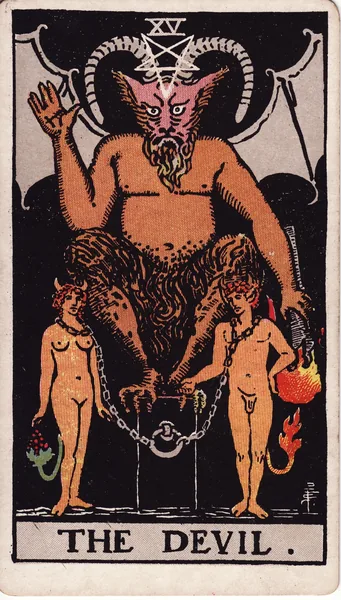
The Seven of Swords is the most consistently cited card in cheating questions, and the reason is visible in the image: someone acting behind another person's back, assuming they will not be caught. Read honestly, it points to concealment and avoidance — a conversation being dodged, a truth being carried alone — and it says nothing by itself about what is being concealed. The Moon is the card of the unknown between two people: the part neither of you has said out loud. It appears when the picture is genuinely unclear, and its advice is to stop guessing and start asking. The Three of Swords is the card of heartbreak, and it is the one people misread most: three swords through a heart looks like betrayal by a third person, but the card is about pain and painful communication, not about how many people are involved. The Devil is the card of attachment and patterns — desire, dependency, a bond that repeats even when it hurts — and it shows up when the question is really about a dynamic, not a single act.
None of these cards confirms cheating alone, and even two or three together do not turn a reading into evidence. What a cluster does is describe a climate: secrecy plus uncertainty plus pain is a climate that deserves a direct conversation, not a louder suspicion. If you want to know the cards themselves, start with the Seven of Swords card page, the Moon card page, the Three of Swords card page, and the Devil card page — then bring what you learn back to your own situation, not the other way around.
A three-card spread for a doubt you can act on
Try three positions, asked in this order: what am I actually feeling; what have I actually observed; and what is the smallest honest step I can take this week? The first position names the feeling underneath the suspicion — fear, hurt, jealousy, exhaustion — without dressing it up as a conclusion. The second position must be read from the list you wrote, not from the story you have been telling yourself: the repeated changes, the words actually used, the facts without the interpretation. If the evidence is thin, say so plainly; a thin second position is information, not a failure. The third position must be small enough to do this week, and it has only three honest forms.
Tell your partner one concrete thing you observed, without the accusation attached to it: “you have been distant this week, and I am worried” is a sentence a person can answer; “you are cheating” is a sentence that ends the conversation before it starts. Ask one direct question with a real answer, like whether something has changed that you should know about. Or set a date for yourself: if nothing has changed in two to four weeks, you will decide on the evidence you have, not on the suspicion you cannot shake — not as punishment, but as honesty. Ask one focused question in a three-card spread and notice which step you keep skipping. The step you keep skipping is usually the one the reading is actually about.
Cards often tied to this question
Questions, answered
Can tarot answer this question?
Tarot doesn't predict outcomes — it reflects the dynamics around your question so you can see your situation more clearly. Think of it as a mirror with symbols rather than a crystal ball.
How do I get a free reading for this?
Ask your question in your own words on TaroFlip's free reading page, draw three cards, and Selene writes an interpretation around your actual question. No account, no card, about a minute.
Which cards are associated with this kind of question?
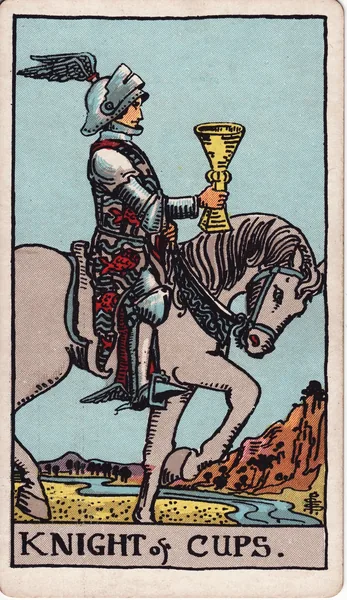
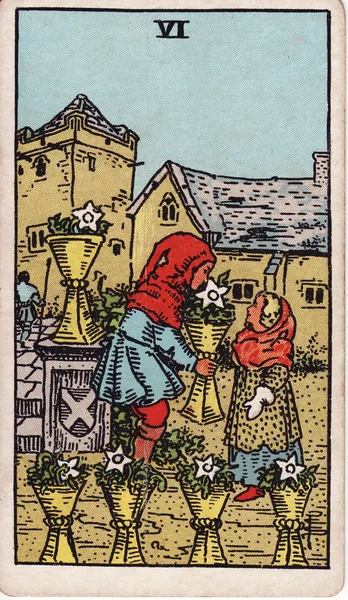
Readers often look to cards like Knight of Cups, Six of Cups, The Devil for love & relationships questions — each one highlighting a different facet of the situation.
Ask Selene yourself
Your question, three cards, and a full AI interpretation — free, no account, about a minute.