 TAROFLIP
Soulmate Tarot Reading: A Free Guide
Is this person my soulmate? It is the question people bring to tarot when a connection feels different from the others — familiar in a way that is hard to explain, steady in a way that is hard to name. A soulmate tarot reading works best when it treats that feeling as a question, not as an answer. The cards cannot name a person, set a date, or issue a certificate that says ‘this one.’ What a reading can do is show you the shape of the connection: the recognition, the growth, the choice it asks of you — and whether the feeling is pointing at something real or at a story you are telling yourself. Below are what a soulmate reading can and cannot show, how it differs from a twin flame reading, the cards readers watch, and a three-card spread for a soulmate question.
Tarot works best here as structured reflection: three cards — where you stand, what crosses you, where things lean — read together around your exact question. Selene, TaroFlip's AI reader, writes every interpretation from your words, never from a script.
What a soulmate reading can — and cannot — show
Start with the honest part, because it is the part that matters most: no tarot card can prove that someone is your soulmate, and no spread can rule it out either. The Two of Cups is the card people reach for first, and it does show mutual exchange — two figures facing each other, cups offered equally. But mutual exchange is a quality of a connection, not a label stamped on a person. It can mean a deep bond, or it can mean a good first month. The Lovers works the same way: it marks choice and alignment, not destiny. A card can name the atmosphere of a relationship. It cannot deliver a verdict on a person.
That limit is not a flaw in the cards. It is the boundary that keeps a reading honest. A reader who tells you a card proves a soulmate is selling certainty the deck does not have — and the cost of that certainty lands on a real relationship, usually in the form of staying too long or leaving too soon. What the cards can show is narrower and more useful: whether the connection has the marks of a soul-level bond — mutual recognition, room to grow, a choice you keep making — and what the bond is asking of you right now. If you read Japanese or Korean, our ソウルメイトタロット and 소울메이트 타로 guides cover the same ground in those languages: the shape of the bond, and how to tell it apart from a twin flame pull.
Soulmate or twin flame: how to tell them apart
The two words get used as if they were interchangeable, and they are not. A soulmate connection is steady by nature: being near this person makes you calmer and more yourself, and the relationship helps both of you grow. It is not free of conflict — no real relationship is — but the conflict moves somewhere. It produces understanding, or a decision, or a boundary that holds. A twin flame connection is different in kind: it mirrors your wounds back at you, which makes it intense, magnetic, and often unstable. The pull is stronger, and so is the whiplash. If the relationship feels like a storm you keep walking back into, that intensity is data too, and it is worth naming honestly.
The label matters less than the pattern, and the pattern is what the cards are good at showing. Ask which one you are actually living in: a bond that steadies you, or a bond that keeps reopening the same wound? A soulmate reading and a twin flame reading ask different questions for exactly this reason — one looks for growth, the other looks for mirroring — and confusing them is how people end up treating a volatile bond as proof of destiny. If the person in question is someone you have not yet spoken to, our page on is my crush interested in me sorts the observable signs first, before any talk of soulmates begins.
The cards readers watch when the question is a soulmate
The Two of Cups is the card most often tied to this question, and the reason is visible in the image: two people facing each other, each offering a cup, neither one chasing. Read honestly, it points to reciprocity in action — interest that comes back to you rather than effort you have to chase. The Lovers is the card of choice, not of fate — it appears when the question is really ‘which way do we choose?’ rather than ‘what will happen to us?’ The Ten of Cups is the long view, the household and the life built together, and it asks whether the bond you want is a moment or a life.
The Six of Cups is the card of recognition: the feeling of having known someone before, the past-life flavour that so many soulmate questions are really about. It is a beginning, not proof — a feeling worth noticing, not a verdict worth obeying. The Moon marks the part of the question that is genuinely unknown, and the Star marks healing: the bond that exists because both of you were recovering from something, and found each other in the middle of it. If you want to know the cards themselves, start with the Two of Cups card page, the Lovers card page, the Ten of Cups card page, and the Six of Cups card page — then bring what you learn back to your own situation, not the other way around.
A three-card spread for a soulmate question
Try three positions, asked in this order: what connects us at the deepest level; what does this connection ask of me; and what is the smallest honest step I can take this week? The first position names the real bond, not the flattering one — the shared values, the recognition, the thing that would still be there if the excitement faded. The second position is the cost and the gift together: every deep bond asks something of you, usually patience, honesty, or a change you have been avoiding. The third position must be small enough to do this week, and it has only three honest forms.
Ask one direct question of the other person — not a confession, just a question with a real answer, like whether they would like to spend more time together. Make one clear invitation with a time and a place, so the other person has something concrete to say yes to. Or set a review date for yourself: if nothing has changed in two to four weeks, you will decide on the evidence you have, not on the feeling you cannot shake — not as punishment, but as honesty. If your question is really about timing — when you will meet this person — our page on when will I meet my soulmate takes up the timing question directly. And if the bond is real but one-sided, our page on mutual love tarot separates feeling from reciprocity, so you can see which one you actually have. Ask one focused question in a three-card spread and notice which step you keep skipping. The step you keep skipping is usually the one the reading is actually about.
Cards often tied to this question
Questions, answered
Can tarot answer this question?
Tarot doesn't predict outcomes — it reflects the dynamics around your question so you can see your situation more clearly. Think of it as a mirror with symbols rather than a crystal ball.
How do I get a free reading for this?
Ask your question in your own words on TaroFlip's free reading page, draw three cards, and Selene writes an interpretation around your actual question. No account, no card, about a minute.
Which cards are associated with this kind of question?
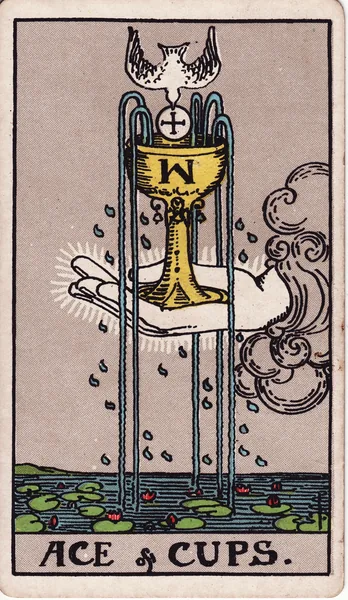
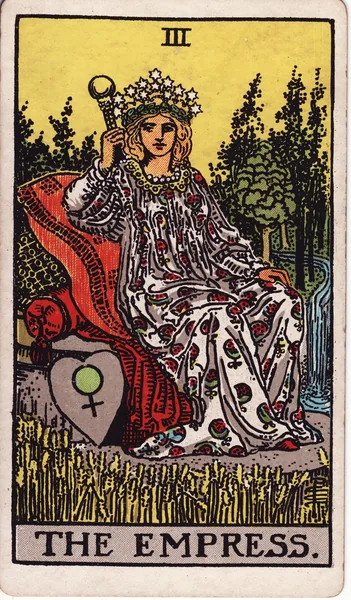
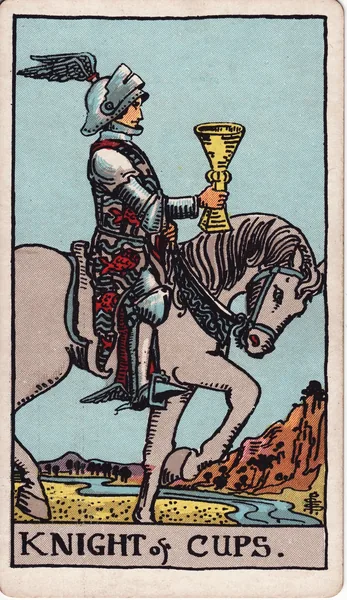
Readers often look to cards like Ace of Cups, The Empress, Knight of Cups for love & relationships questions — each one highlighting a different facet of the situation.
Ask Selene yourself
Your question, three cards, and a full AI interpretation — free, no account, about a minute.