 TAROFLIP
Mutual Love Tarot: Is It Reciprocal? Free Guide
Mutual love is the question underneath almost every crush: not 'do they like me' but 'do we like each other — in the same way, at the same depth, with the same willingness to act on it?' One-sided interest can look a lot like mutual love from the inside. A quick reply, a long conversation, a remembered detail — each one feels like evidence, and each one can also be politeness, curiosity, or a habit of being warm to everyone. A tarot reading cannot tell you what another person feels. It cannot confirm a feeling that belongs to someone else, and it cannot promise that a connection will become a relationship. What the cards can do is separate the three things people usually fuse into one question: what you feel, what the other person has actually shown, and what the space between you is doing. Below are the three kinds of mutuality the cards can show, what tarot cannot say about whether it is mutual, the cards readers watch, and a three-card spread for reading your own situation clearly.
Tarot works best here as structured reflection: three cards — where you stand, what crosses you, where things lean — read together around your exact question. Selene, TaroFlip's AI reader, writes every interpretation from your words, never from a script.
Three kinds of mutuality the cards can actually show
The first is mutual feeling — the part everyone asks about, and the part the cards are worst at proving. Two people can feel the same thing at the same depth and still never say it, and two people can feel very different things while exchanging the warmest messages. Feeling is private, and no spread can open another person's head. What the cards can show is your side of it with unusual honesty: whether what you feel is affection for this person, or affection for the idea of being chosen, or relief at not being alone. Those are three different feelings that wear the same name, and they point at three different next steps. A reading that names which one you are actually carrying is already doing the useful work, even before the other person enters the picture.
The second is mutual action — the only kind of mutuality you can check without asking anyone to confess anything. Does the other person make time, remember what you said, propose the next meeting, or only respond when you initiate? Action is the part of the question that leaves evidence. Our page on is my crush interested in me works through the same distinction: the signs you can count, and the ones that only feel like signs because you want them to be. In a spread, look at the card in the other person's position not as a verdict on their heart but as a picture of what they have shown so far — the invitations made, the questions asked, the effort returned. If the picture is mostly your effort, the reading is not telling you that you are unloved. It is telling you where the work is sitting.
The third is mutual choice — the one that matters most and gets asked about least. Two people can like each other and still not choose each other, because choice needs timing, courage, and a life with room in it. The Lovers is the card of choice, not of destiny, and it appears in these readings exactly when the question stops being 'do they feel it too' and starts being 'are we both willing to act on it'. If the answer to that second question is unclear, the honest next step is usually smaller than a confession: a direct question, a clear invitation, a sentence that gives the other person something real to respond to. Our page on should I confess my feelings takes up the timing of that step, including the part where waiting feels safer than asking.
What tarot cannot say about whether it is mutual
Tarot cannot tell you whether another person loves you. It cannot confirm a feeling that belongs to someone else, cannot promise that a connection will become a relationship, and cannot tell you whether to reach out. Any page that offers those certainties is selling something the cards do not have. A relationship is a decision two people make, and one person's cards cannot make it for the other. The Moon often appears in these readings, and it is worth taking seriously: it marks the part of the question that is genuinely unknown, not a puzzle the right spread will solve. The honest response to the Moon is not another draw. It is a conversation, or a clear invitation, or a decision about how long you are willing to wait for one.
What tarot can show is what the uncertainty is doing to your present choices: whether you are reading every message for hidden meaning, whether you have stopped noticing other people, whether the waiting has become the relationship itself. If you find yourself asking the same question every day, the question has stopped being about the other person. It is about the waiting, and the waiting deserves its own honest look. Our page on will I find love again separates wanting a person from wanting the feeling of being chosen — a distinction that changes what 'mutual' would even need to look like.
Cards readers watch when the question is mutual love
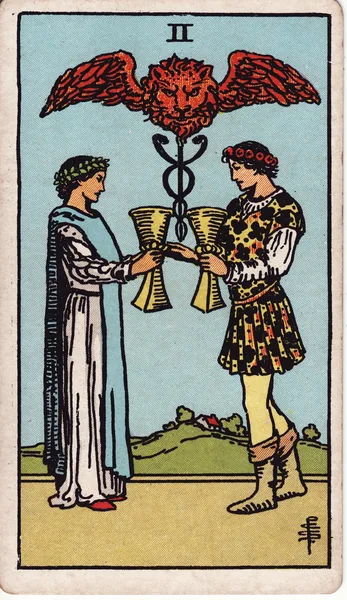
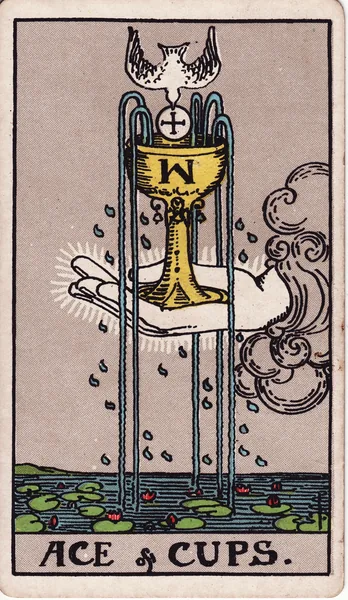
The Two of Cups is the card of meeting halfway: two people facing each other, cups offered equally, neither one chasing. Upright it shows reciprocity in action — interest that comes back to you rather than effort you have to chase. The Lovers is the card of choice, not of fate — it appears when the question is really 'which way do we choose?' rather than 'what will happen to us?' The Ace of Cups is the newest feeling in the spread — a beginning so early it has no name yet, which is exactly why it is easy to miss while looking for a grand confirmation. The Moon is the card of the unknown between you: the part neither of you has said out loud, and the reason a direct question matters more than another sign.
If you want to know the cards themselves, start with the Two of Cups card page, the Lovers card page, the Ace of Cups card page, and the Moon card page — then bring what you learn back to your own question, not the other way around.
A three-card spread for reading mutual love
Try three positions, asked in this order: what am I bringing to this connection; what has the other person actually shown; and what is the smallest honest step I can take this week? The first position names your real contribution, not the flattering one — the attention, the patience, the part of you that is hoping to be chosen. The second position must be read from evidence, not from hope: the invitations, the remembered details, the time given. If the evidence is thin, say so plainly; a thin second position is information, not a failure. The third position must be small enough to do this week, and it has only three honest forms.
Ask one direct question of the other person — not a confession, just a question with a real answer, like whether they would like to meet again next week. Make one clear invitation with a time and a place, so the other person has something concrete to say yes to. Or set a date for yourself: if nothing has changed by then, you will stop reading signs and start living as though the answer is no — not as punishment, but as honesty. Ask one focused question in a three-card spread and notice which step you keep skipping. The step you keep skipping is usually the one the reading is actually about.
Cards often tied to this question
Mutual love or soulmate? how to tell them apart
Mutual love and a soulmate connection are not the same thing, and confusing them is how people stay too long in a one-sided bond. Mutual love is observable: the other person reaches back, remembers what matters to you, and shows up without being asked twice. You can point to it. A soulmate connection is a feeling about the bond itself — recognition, steadiness, the sense that this person makes you more yourself. The feeling can be real even when the love is not yet mutual, and that is exactly the case to watch. A strong feeling plus no reciprocity is a crush with a grand name, not a soulmate.
The honest test is the same one this page uses throughout: look at what comes back to you. If the cards keep showing mutual exchange — the Two of Cups, the Lovers as a choice both of you keep making — the bond has the marks of both mutual love and something deeper. If the cards keep showing waiting, chasing, or a door that only opens from their side, the feeling is telling you about yourself, not about the two of you. Our soulmate tarot reading guide takes up the soulmate question on its own terms — what it can and cannot show, and how it differs from a twin flame reading — so you can see which question you are actually asking.
Questions, answered
Can tarot answer this question?
Tarot doesn't predict outcomes — it reflects the dynamics around your question so you can see your situation more clearly. Think of it as a mirror with symbols rather than a crystal ball.
How do I get a free reading for this?
Ask your question in your own words on TaroFlip's free reading page, draw three cards, and Selene writes an interpretation around your actual question. No account, no card, about a minute.
Which cards are associated with this kind of question?
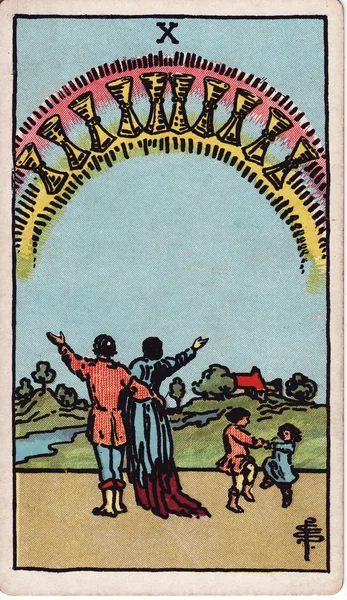
Readers often look to cards like Two of Cups, Ten of Cups, Ace of Cups for love & relationships questions — each one highlighting a different facet of the situation.
Is mutual love the same as a soulmate connection?
No. Mutual love is observable: the other person reaches back and shows up without being asked twice. A soulmate connection is a feeling about the bond itself — recognition and steadiness. The feeling can be real even when the love is not yet mutual, so check reciprocity first. Our soulmate tarot reading guide (https://taroflip.com/questions/love/soulmate-tarot-reading.html) explains how the two questions differ and what a reading can and cannot show.
Ask Selene yourself
Your question, three cards, and a full AI interpretation — free, no account, about a minute.